
Why BPM in Manufacturing Should Be Part of Your Tech Strategy
Table of contents
Quick Access
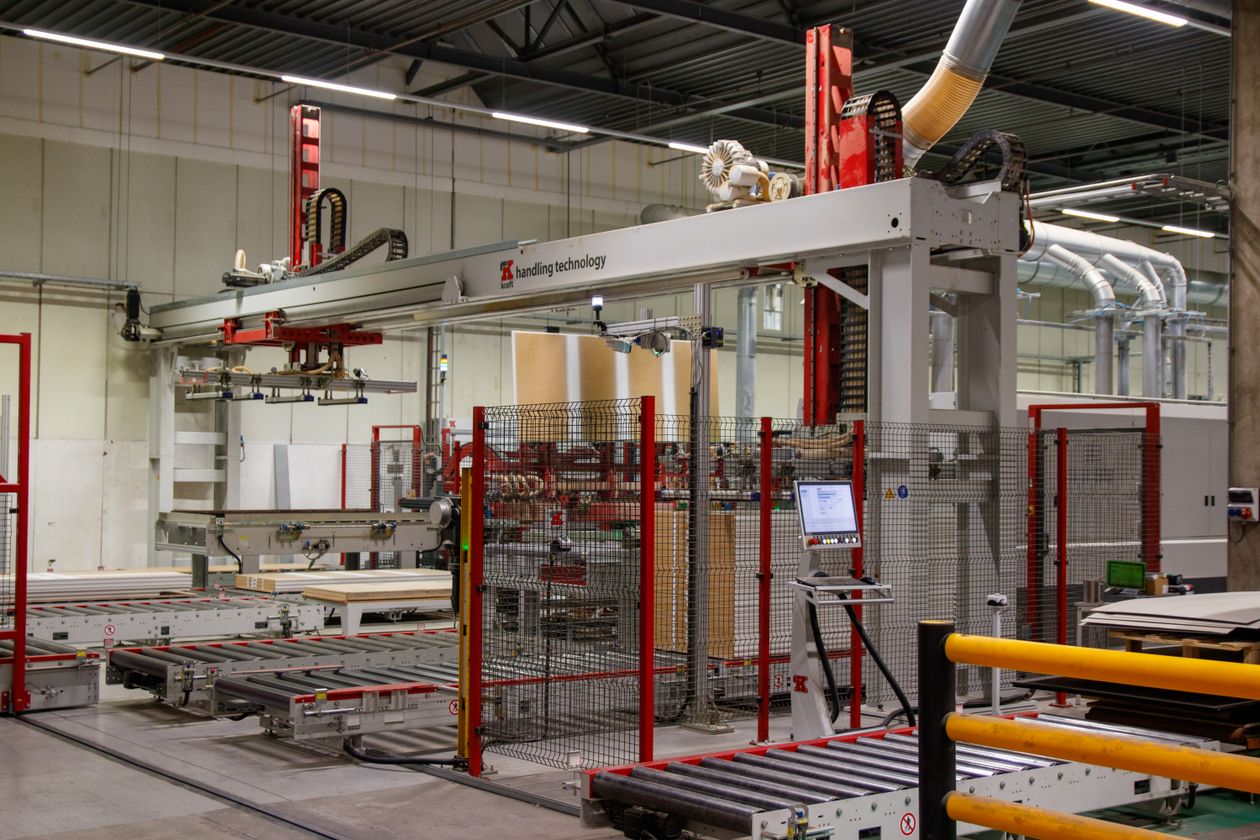
Industrial manufacturing processes are inherently complex, involving multiple systems and workflows that must be coordinated to ensure operational efficiency. Without proper management, inefficiencies, errors, and downtime can impact production and quality. Visibility and control over these processes are critical to respond swiftly to changes in demand, quality, and regulatory compliance.
Implementing Business Process Management (BPM) in manufacturing represents a strategic decision that directly impacts an organization's ability to optimize processes, integrate disparate systems, and adapt to digital transformation. Choosing how and when to adopt BPM involves considerations around architecture, integration, security, and maintenance that must be carefully evaluated to avoid technical debt and operational risks.
Making incorrect decisions regarding BPM adoption can entail high operational costs, unnecessary complexity, and limitations in future scalability. Therefore, this document delves into the technical and strategic aspects that CTOs and technology directors must consider when integrating BPM into manufacturing strategy.
What is BPM in manufacturing and why does it matter?
Definition and relevance for manufacturing CTOs
Business Process Management (BPM) is a discipline that enables modeling, automating, monitoring, and optimizing business processes. In manufacturing, BPM focuses on production, logistics, and administrative processes related to industrial operations.
Implementing BPM in manufacturing provides process visibility, bottleneck identification, and alignment of operations with business objectives. For a CTO, understanding BPM is crucial to ensure technology supports plant efficiency and adaptability.
The relevance lies in BPM acting as an orchestration layer connecting ERP, MES, SCM, and other systems, facilitating coordinated management of activities and resources.
Using BPM in manufacturing not only improves efficiency but also enables traceability, regulatory compliance, and incident response capabilities—key factors in competitive industrial environments.
Technical implementation of BPM in industrial processes
Technical implementation involves selecting a BPM platform supporting visual modeling, business rules, integration with existing systems, and real-time monitoring. Standards like BPMN are commonly used to represent processes.
Architecturally, BPM in manufacturing requires connectors or adapters for ERP, MES, databases, and IoT sensors. The platform must support workflow execution, exception handling, and scalability to handle production peaks.
Integration with REST or SOAP APIs is typical to connect heterogeneous systems, while orchestration can include human and automated tasks with defined SLAs.
The outcome is a solution enabling process automation and control, with dashboards for analysis and alerts for proactive operations.
Impact on technology architecture and business strategy
Incorporating BPM adds an orchestration layer that can reduce direct dependencies between systems, simplifying future integrations.
From a business perspective, this enables greater agility to adapt processes without modifying core system code, reducing technical debt and accelerating time to market for operational changes.
For engineering teams, it shifts focus toward process and rule management, requiring skills in modeling and monitoring. Budget-wise, it may imply upfront investment in licenses and training, but with potential to optimize operational costs.
Overall, BPM in manufacturing is a strategy that connects engineering and business to achieve efficiency, traceability, and adaptability.

How to design an effective BPM architecture for manufacturing?
Architectural principles for industrial BPM
An effective BPM architecture in manufacturing must be modular, scalable, and resilient. This involves clearly separating the orchestration layer from other systems, facilitating maintenance and evolution.
A microservices or loosely coupled services approach is recommended, where the BPM platform acts as a workflow engine invoking specialized services for specific tasks.
The design must consider high availability and fault tolerance since industrial processes are critical for continuous production.
This approach reduces downtime risks and facilitates horizontal scaling to handle demand or process volume variations.
Common components and technology stack
The typical stack includes a BPM platform supporting BPMN and DMN standards, a business rules engine, repositories for processes and cases, and monitoring and analytics tools.
Integration with industrial systems uses middleware ESB or integration platforms like Mulesoft, enabling connectivity with ERP, MES, and IoT devices through APIs and specific adapters.
Deployment often occurs in containers or private cloud to enable scalability and management via CI/CD and Infrastructure as Code tools.
Logging, distributed tracing, and alerting mechanisms provide full observability and proactive incident management.
Implications for maintenance, scalability, and technical debt
A well-designed architecture reduces technical debt by isolating process logic and rules within the BPM platform, avoiding rigid code in core applications.
This facilitates changes without impacting critical systems, improving maintainability and reducing regression risks.
Scalability is ensured by the BPM platform’s and middleware’s ability to handle variable loads and distribute processing.
However, distributed complexity requires investment in advanced monitoring and dependency management, impacting team capacity and operational budget.
What integration strategies are key for BPM in manufacturing?
Definition and integration challenges in manufacturing
Integrating systems in manufacturing involves connecting ERP, MES, SCM, CRM, IoT sensors, and other specialized systems to achieve coherent, real-time information flow.
The challenge lies in technological heterogeneity, diverse protocols, and the need for precise synchronization to avoid production or inventory errors.
BPM integration must ensure the platform can orchestrate processes involving multiple systems without compromising performance or security.
For a CTO, successful integration is key to operational visibility and control, impacting responsiveness and product quality.
Technical strategies for effective integration
Using an Enterprise Service Bus (ESB) or integration platforms such as Mulesoft enables loosely coupled, reusable connections between systems, transforming and routing messages across formats and protocols.
BPM integrates with the ESB to orchestrate processes invoking distributed services, handling events, and coordinating data flows via well-defined APIs.
Implementing error handling, compensation, and retry mechanisms is essential to ensure integration resilience.
Design must also consider API versioning and contract management to minimize impact during updates and maintain ecosystem stability.
Impact on architecture, team, and operations
Integration via ESB and BPM reduces direct application dependencies, facilitating independent evolution and inclusion of new systems or technologies.
For teams, it demands specialization in middleware, APIs, and distributed flow monitoring, potentially requiring training and organizational adjustments.
Operationally, it enhances the ability to detect and resolve integration failures before they impact production, improving stability and reliability.
Budget considerations include licensing, infrastructure, and support for these platforms, plus investment in automation and observability.
How to ensure security and compliance in industrial BPM?
Importance of security and compliance for BPM in manufacturing
Security is critical for BPM in manufacturing due to interconnected systems handling sensitive data, intellectual property, and machinery control.
Regulatory compliance, such as quality and industrial safety standards, demands traceability and auditability of automated processes.
A CTO must ensure that the BPM platform and related architecture implement strict controls to protect data integrity and confidentiality.
Security lapses can lead to operational risks, regulatory penalties, and reputational damage.
Technical measures for security and compliance
Robust authentication and authorization mechanisms should be implemented, ideally integrated with corporate IAM systems for centralized management.
Data encryption in transit and at rest is essential, especially when integrating with external systems or cloud environments.
The BPM platform must support detailed logging and auditing to meet regulatory requirements and enable forensic analysis if incidents occur.
Segregation of environments for development, testing, and production is important to minimize exposure risks.
Consequences for architecture, operations, and team
Incorporating security and compliance adds complexity layers to architecture, requiring specialized components and clear governance processes.
Teams need training in security best practices, access management, and incident response, increasing demand for specialized profiles.
Operationally, this translates into continuous monitoring, vulnerability management, and regular updates to mitigate risks.
Budget must cover security tools, audits, and potentially certifications without compromising operational agility.
What operational and maintenance challenges does BPM in manufacturing entail?
Key operational challenges in industrial BPM
Operating BPM in manufacturing requires ensuring continuity of critical processes and rapid incident detection and resolution to avoid production impact.
Automated processes can be complex with multiple dependencies, making monitoring and exception management fundamental.
Teams need real-time visibility and tools to manually intervene when necessary, minimizing downtime.
Operations must balance automation with flexibility to adapt to production or regulatory changes.
Technical aspects of maintenance and support
Maintenance involves updating processes, business rules, and integration adapters as systems and business needs evolve.
Implementing CI/CD pipelines with automated testing reduces risks when deploying BPM changes.
Support must include performance monitoring, proactive alerts, and log analysis to anticipate issues and optimize resources.
Continuous documentation and training are essential to avoid knowledge silos and reduce technical debt related to tacit knowledge.
Impact on team, budget, and technical debt
Operational challenges require a multidisciplinary team skilled in BPM, integration, monitoring, and security, potentially requiring organizational adjustments.
Budget must consider support, licensing, infrastructure, and ongoing training costs to maintain an efficient and secure platform.
Technical debt can accumulate if changes and documentation are not properly managed, affecting agility and increasing operational risks.
A mature and well-supported operation contributes to stability and continuous improvement, facilitating manufacturing scalability and flexibility.

What is the impact on team, budget, and technical debt?
Implications for team capacity and structure
Integrating BPM in manufacturing requires specialized roles in process modeling, platform administration, integration, and monitoring.
This may necessitate hiring or training personnel experienced in BPM, middleware, security, and agile methodologies for change management.
Close collaboration between development, operations, and business teams is vital to avoid silos that increase technical debt.
Knowledge management must be prioritized to prevent dependence on individual experts and facilitate team scalability.
Budgetary and investment considerations
Initial budget may include BPM platform licenses, deployment infrastructure, integration and security tools, plus training.
Recurring costs cover support, maintenance, updates, and monitoring, which should be considered part of the IT strategy.
Balancing BPM investment against expected efficiency gains and error reduction is essential, also accounting for technical debt impact.
A phased, business-prioritized approach can help distribute budget and validate outcomes before broad implementation.
Impact on technical debt and future risks
Rushed or poorly designed implementations can generate significant technical debt, including rigid processes, fragile integrations, or lack of documentation.
This can impair the organization’s ability to adapt to regulatory or market changes, increasing costs and operational risks.
Conversely, a well-planned BPM strategy reduces technical debt by promoting modularity, visibility, and governance over processes.
CTOs should consider technical debt beyond code, including architecture, processes, and team capabilities to maintain a sustainable solution.
How to plan an effective BPM implementation roadmap in manufacturing?
Initial assessment and diagnosis
The first step is a thorough assessment of current processes, existing systems, team capabilities, and business objectives.
This diagnosis should identify bottlenecks, inefficiencies, integration gaps, and security or compliance risks.
Involving business and engineering stakeholders is crucial to align expectations and set clear priorities.
The outcome is a process and systems map guiding technology selection and BPM architecture design.
Defining architecture and implementation strategy
Based on the diagnosis, define a modular, scalable architecture selecting BPM and middleware platforms compatible with existing infrastructure.
The strategy should include phased implementation, starting with critical or high-impact processes to validate the solution.
Integration, security, and monitoring mechanisms must be designed from the outset to avoid rework and technical debt.
Change management and training plans are essential to ensure adoption and efficient operation.
Deployment planning, monitoring, and evolution
The roadmap should include a detailed plan for progressive deployment with automated testing and continuous validation to minimize risks.
Establish KPIs and dashboards to monitor performance and detect deviations in real time.
Platform evolution should consider process updates, new integrations, and improvements in security and operations.
The roadmap must remain flexible to adapt to business and technology changes, ensuring solution sustainability and scalability.
For organizations needing to evaluate such decisions, Rootstack can serve as a strategic technology partner to analyze existing architecture, define implementation strategies, and support BPM platform evolution in manufacturing. Their expertise in integrations, modernization, and digital transformation helps mitigate risks and optimize technology investments, aligning engineering with business goals. Contact us
Related blogs

Everything You Need to Know About Immersive Applications

Complete Guide on What Is Vertical Software
