
A Practical Guide to Tech Outsourcing for CTOs and Tech Leaders
Table of contents
Quick Access
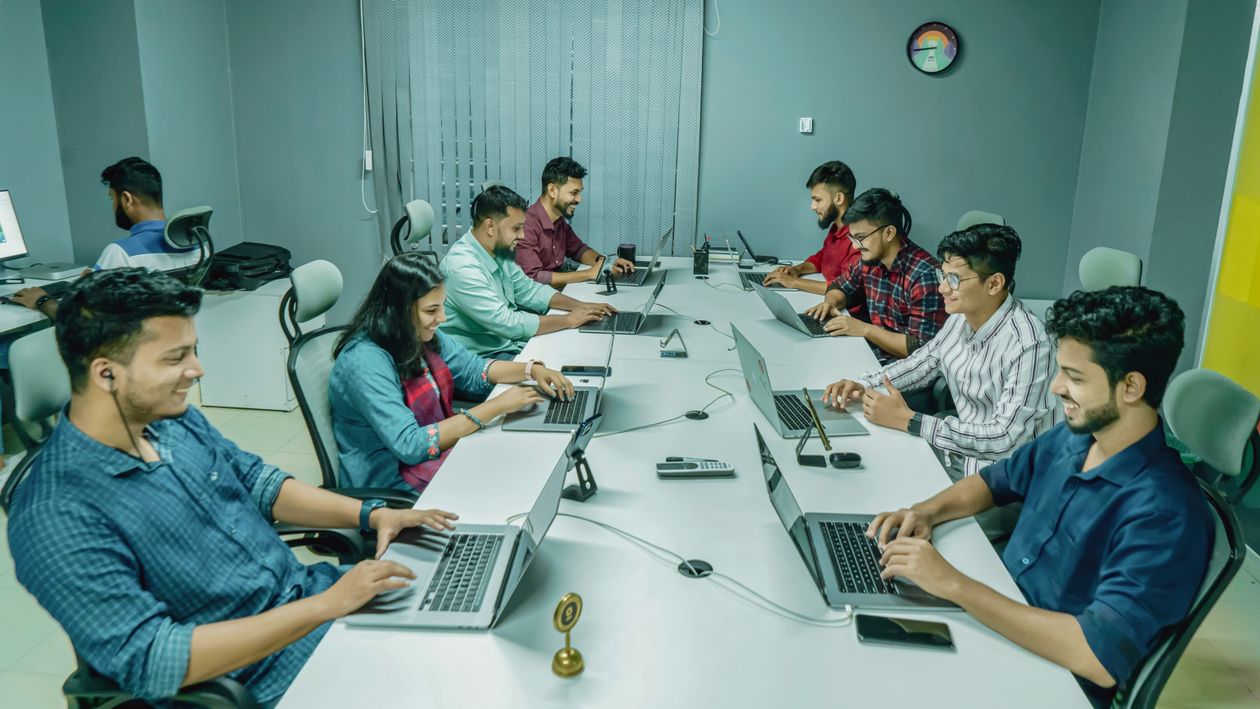
Technology organizations today face the challenge of optimizing resources, accelerating time to market, and staying competitive amid increasingly shorter innovation cycles. In this context, tech outsourcing emerges as a strategic alternative to complement internal capabilities by delegating technological functions, projects, or services to external providers. However, deciding when and how to outsource is complex: it involves assessing security risks, scalability, quality, technical debt, and the synergy between internal and external teams.
Poorly planned tech outsourcing can lead to loss of control over architecture, increased technical debt, integration difficulties, and delivery delays, negatively impacting business strategy. Therefore, CTOs and technology leaders must make informed decisions about which functions to outsource, how to select partners, which contractual models to use, and how to design an adoption roadmap that minimizes risks and maximizes benefits.
This practical guide delves into the technical and strategic considerations technology leaders must weigh to successfully implement tech outsourcing, aligning externalization with enterprise architecture, team capacity, security, and go-to-market strategy.
What is tech outsourcing and why does it matter for a CTO?
Definition and strategic relevance
Tech outsourcing involves delegating partially or completely technological functions, projects, or services to external providers to complement or replace internal capabilities. For a CTO, this practice is relevant because it can directly impact innovation capacity, operational efficiency, and control over the technology platform.
From an architectural perspective, tech outsourcing not only means transferring tasks but also externalizing part of the responsibility for infrastructure, code, and integrations. This requires clear interface design and established governance.
Operationally, outsourcing can enable rapid scaling of teams and access to specialized expertise but also introduces challenges in coordination, quality, and security. Therefore, the decision must align with technological and business strategy.
The impact on internal teams is significant: the CTO must evaluate how outsourcing affects technical ownership, knowledge management, and organizational culture, anticipating risks related to technical debt and technology dependency.
Technical components involved
Implementing tech outsourcing requires clearly defining which technological components will be outsourced: software development, support, infrastructure, testing, or maintenance. Each component has different integration, security, and operational requirements.
The architecture must consider APIs, service level agreements (SLAs), authentication mechanisms, and monitoring to manage the quality and availability of outsourced services. The use of continuous integration/continuous delivery (CI/CD) tools and observability that facilitate collaboration between internal and external teams is also relevant.
In cloud environments, outsourcing may involve delegating management of services on public platforms or managing hybrid environments, requiring clear responsibility boundaries and infrastructure access controls.
These technical aspects form the foundation to avoid the accumulation of technical debt and ensure outsourcing does not compromise scalability or security.
Considerations for decision making
The CTO must assess whether tech outsourcing addresses a need for temporary capacity, lack of expertise, cost optimization, or acceleration of time to market. The decision involves balancing benefits such as flexibility and talent access with risks like loss of control and increased technical debt.
It is necessary to consider the maturity of the internal team to manage vendors, the criticality of systems to be outsourced, and the capacity to integrate and supervise external work.
The strategy should include plans to mitigate technology dependency risks and ensure continuous knowledge transfer to maintain internal team autonomy in the long term.
In summary, the tech outsourcing decision is multidimensional and requires deep technical and strategic analysis aligned with architecture and technology roadmap.

What are the main tech outsourcing models and when to apply each?
Total vs. partial outsourcing
Total outsourcing means completely delegating a technological function or project, while partial outsourcing refers to delegating only certain tasks or specific modules. For a CTO, this difference impacts the level of control and risk.
In total outsourcing, the provider assumes full responsibility from design to operation, which can accelerate delivery but reduces direct visibility and control. Partial outsourcing allows the organization to retain some technical ownership and better manage integration.
Technically, total outsourcing requires clearly defined interfaces, SLAs, and reporting mechanisms to ensure quality and compliance, while partial outsourcing demands a modular architecture that separates responsibilities.
The choice depends on internal capacity, project criticality, and control strategy. Partial outsourcing is usually preferred for critical or core systems, while total outsourcing may be applied to non-strategic or rapid execution projects.
Onshore, nearshore, and offshore
These models differ by the geographic location of the provider and have implications for communication, costs, and collaboration. Choosing among them involves trade-offs between cost, quality, and cultural synergy.
Onshore outsourcing offers time zone and cultural proximity, facilitating collaboration and management. Nearshore combines proximity advantages with moderate costs, while offshore tends to be more economical but with communication and coordination challenges.
From an organizational architecture standpoint, nearshore and offshore require greater investment in collaboration tools, documentation, and integration processes to avoid quality and scalability issues.
The impact on internal teams includes the need for more robust management and coordination roles, as well as mechanisms to ensure knowledge transfer and alignment with the technical culture.
Managed services vs. staff augmentation
Managed services entail contracting a provider to manage a complete service with responsibility for outcomes, while staff augmentation involves incorporating external resources to complement the internal team under the organization’s direction.
In managed services, the provider has autonomy to design and operate, requiring strict SLAs and monitoring mechanisms. In staff augmentation, external resources work as part of the team with direct internal supervision.
The technical architecture must support both models through continuous integration, version control, and clear documentation to avoid bottlenecks and technical debt.
The budget and management impact differ: managed services can simplify management but reduce control, while staff augmentation maintains control but increases coordination complexity.
How does tech outsourcing affect technology architecture and technical debt?
Modularity and design for outsourcing
To facilitate tech outsourcing, architecture must be modular and based on decoupled components with well-defined interfaces. This allows outsourcing specific parts without affecting system integrity.
Patterns such as microservices, RESTful APIs, or event-driven architectures enable this modularity by allowing external teams to work on independent services or modules.
Implementing this architecture requires investment in design, automated testing, and integration tools to ensure quality and consistency.
Modular architecture reduces technical debt associated with outsourcing by preventing changes in outsourced parts from negatively impacting the overall system or generating integration debt.
Technical debt generated by poorly managed outsourcing
Tech outsourcing can increase technical debt if code standards, documentation, testing, and integration processes are not properly managed.
When external teams are not aligned with internal practices or governance is lacking, inconsistencies, maintenance debt, and scalability problems arise.
Lack of knowledge transfer and excessive dependence on the provider can create organizational debt that hinders future modifications or provider changes.
CTOs must implement clear quality policies, periodic audits, and monitoring mechanisms to mitigate these risks and control technical debt.
Integration and synchronization between internal and external teams
The coexistence of internal and external teams requires establishing processes and tools to synchronize development, testing, and deployments.
This includes shared CI/CD pipelines, version management, centralized documentation, and issue tracking systems that ensure visibility and control.
Technical integration must be supported by architecture that facilitates collaboration and minimizes critical dependencies between teams.
Poor integration can cause bottlenecks, delays, and technical debt, impacting scalability and team responsiveness.

What security and compliance risks does tech outsourcing entail?
Access and control of sensitive data
Outsourcing technological functions implies granting access to data and systems that may be sensitive or critical to the business. This represents a risk that must be rigorously managed.
Access controls based on roles, multi-factor authentication, and network segmentation must be implemented to limit provider access scope.
Continuous auditing and monitoring of provider activities are essential, alongside clear contractual agreements on data handling.
Non-compliance can lead to vulnerabilities, data loss, and reputational damage, affecting business continuity and generating legal and operational costs.
Compliance and applicable regulations
Depending on sector and geography, tech outsourcing must comply with regulations such as GDPR, HIPAA, PCI-DSS, or other local laws.
CTOs must ensure providers understand and comply with these regulations through contractual clauses and periodic audits.
Architecture must include privacy protection and data traceability mechanisms, such as encryption in transit and at rest, and access logs.
Non-compliance can result in regulatory penalties and compromise customer and partner trust, making this a critical outsourcing aspect.
Incident management and operational continuity
Tech outsourcing requires joint incident management plans covering detection, response, and recovery.
Clear communication protocols must be established between internal teams and providers, with defined roles and responsibilities.
Continuity must be ensured through service level agreements covering availability, backups, and disaster recovery.
Poor management increases the risk of outages and affects system resilience, impacting trust and business operations.
How to manage external teams and maximize nearshore synergy?
Effective communication and coordination
Managing external teams demands establishing clear communication channels and processes to avoid misunderstandings and delays.
Collaborative tools such as project management platforms, video conferencing, and centralized documentation are essential to maintain alignment and transparency.
Coordination must consider time zone, cultural, and language differences, maximizing overlap time to facilitate meetings and real-time feedback.
Effective communication reduces quality risks, accelerates problem resolution, and improves integration, positively impacting time to market.
Knowledge transfer and technical ownership
To avoid excessive dependence and technical debt, continuous knowledge transfer from the provider to the internal team is fundamental.
This involves documenting processes, standards, and decisions, as well as training internal staff in outsourced technologies and solutions.
CTOs must define mechanisms for the internal team to maintain technical ownership even when part of development or support is outsourced.
This practice contributes to organizational autonomy and reduces risks in provider changes or technology evolution.
Roles and responsibilities in outsourcing management
Defining clear roles for outsourcing management is key to ensuring compliance and quality. This includes coordinators, architects, and quality owners both internally and at the provider.
These roles must have authority to make decisions, manage issue escalation, and ensure contractual and technical agreement compliance.
Establishing a governance framework with periodic meetings, reports, and metrics facilitates performance tracking and control.
Structured management reduces risks, improves collaboration, and helps maintain alignment with strategic and technical objectives.

How to design an effective roadmap to implement tech outsourcing?
Initial assessment and diagnosis
The first step to implementing tech outsourcing is conducting a detailed assessment of the current state: internal capabilities, architecture, processes, and needs.
Critical functions, expertise gaps, and existing risks must be identified, along with the level of technical debt and technology dependency.
This diagnosis enables setting clear objectives, prioritizing outsourcing areas, and establishing vendor selection criteria.
A rigorous assessment reduces risks, avoids rushed decisions, and ensures outsourcing delivers real and sustainable value.
Strategy definition and vendor selection
Based on the diagnosis, a strategy must be designed determining which functions to outsource, the most suitable outsourcing model, and vendor selection criteria.
The strategy should include technical, contractual, security, and management aspects aligned with architecture and technology roadmap.
Vendor selection must consider experience, technical capability, regulatory compliance, and cultural synergy to maximize nearshore synergy.
A well-defined strategy facilitates negotiation, reduces risks, and improves the quality and scalability of the outsourced service.
Implementation, governance, and continuous evolution
Implementation should be carried out in controlled phases, with pilots or trial projects to validate processes and adjust technical and operational integration.
A governance framework with performance indicators, audits, and periodic reviews must be established to ensure compliance and detect deviations.
The roadmap should include continuous evolution plans to reduce technical debt, improve processes, and scale collaboration as needs change.
Rootstack can act as a strategic partner to analyze existing architecture, define an implementation strategy, and support platform evolution, assisting CTOs in comprehensive tech outsourcing management.
Technical FAQ
How to avoid loss of control when outsourcing critical functions?
It is recommended to maintain internal ownership over architecture and design, define clear SLAs, implement continuous monitoring, and establish governance with responsible roles both internally and externally.
What tools facilitate collaboration between internal teams and external providers?
Project management platforms (Jira, Trello), version control systems (Git), CI/CD tools, real-time communication (Slack, Teams), and centralized documentation (Confluence) are key.
How to manage technical debt generated by external teams?
By implementing code standards, cross-reviews, automated testing, periodic audits, and promoting knowledge transfer to the internal team.
What criteria should be used to select a tech outsourcing provider?